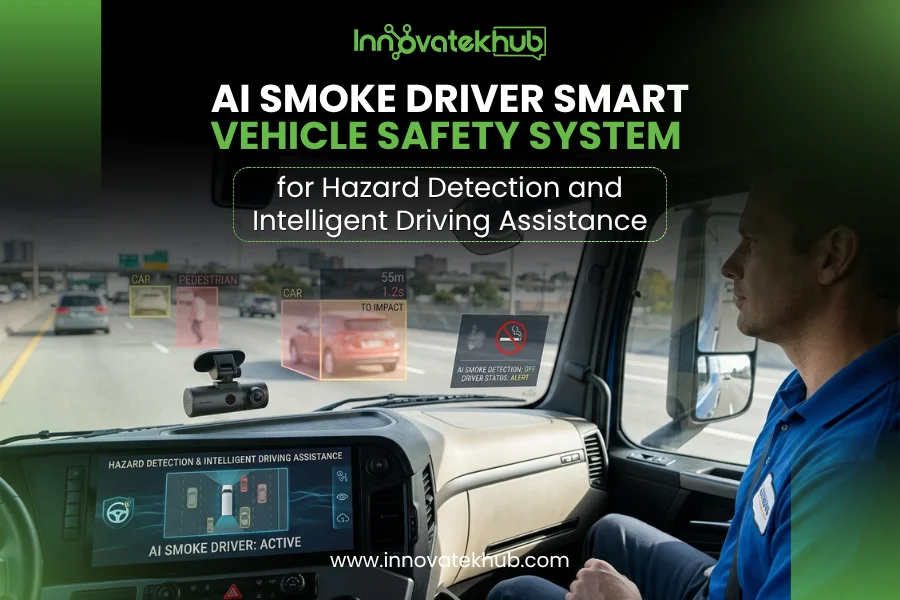
Modern vehicles are rapidly evolving from mechanical machines into intelligent systems powered by sensors, automation, and artificial intelligence. One of the emerging concepts in this space is the idea of an AI Smoke Driver system, a smart safety layer designed to detect smoke, fire risks, and environmental hazards inside or around a vehicle and assist drivers in real time.
While the term “AI Smoke Driver” is still evolving and not tied to a single standardized product, it represents a growing category of AI-driven automotive safety systems focused on hazard detection, emergency prevention, and intelligent driving support.
At Innovatek Hub, we explore innovations shaping the future of mobility. In this detailed 1600+ word guide, we will break down what AI Smoke Driver means, how it works, its features, benefits, real-world applications, challenges, and its role in the future of smart transportation.
What Is AI Smoke Driver
The AI Smoke Driver concept refers to an artificial intelligence-based vehicle safety system designed to detect smoke, fire, or hazardous air conditions in or around a vehicle and respond instantly to protect passengers.
It can be understood as a combination of:
- AI-based hazard detection
- Smoke and fire sensors
- Driver assistance systems
- Real-time alert mechanisms
- Automated safety responses
The goal is simple: prevent accidents and protect lives by identifying dangers before they escalate.
This system can be integrated into modern cars, electric vehicles, and autonomous driving platforms to enhance safety and situational awareness.
Why AI Smoke Driver Systems Are Becoming Important
Vehicle safety is no longer limited to airbags and seatbelts. With increasing electronic complexity in modern cars, new risks are also emerging.
Rising Vehicle Electronics
Modern vehicles contain:
- Battery systems
- Advanced wiring
- Electric propulsion units
- Smart infotainment systems
These components increase the risk of overheating or electrical smoke incidents.
Electric Vehicle Growth
With the rise of electric vehicles, thermal management and battery safety have become critical.
Road Safety Demands
Drivers need faster hazard detection systems that react in real time.
AI Integration in Cars
Artificial intelligence is already used in:
- Lane detection
- Collision avoidance
- Parking assistance
Adding smoke detection is a natural extension of this evolution.
How AI Smoke Driver Works
The AI Smoke Driver system combines multiple technologies to detect and respond to hazards effectively.
1. Smoke and Gas Sensors
Sensors inside the vehicle detect:
- Smoke particles
- Toxic gases
- Temperature changes
These sensors act as the first line of defense.
2. AI Processing Unit
The AI system analyzes sensor data and determines whether the detected condition is:
- Normal environmental variation
- Mechanical issue
- Fire or smoke hazard
3. Computer Vision Systems
Cameras inside and outside the vehicle can detect:
- Smoke outside the car
- Fire on nearby vehicles
- Roadside hazards
4. Real-Time Alerts
Once a risk is detected, the system immediately alerts the driver through:
- Dashboard warnings
- Voice alerts
- Mobile notifications
5. Automated Safety Response
In advanced systems, AI may:
- Reduce vehicle speed
- Activate hazard lights
- Open windows for ventilation
- Shut down affected systems
Key Features of AI Smoke Driver
| Feature |
Description |
| Smoke Detection |
Identifies smoke inside or outside the vehicle |
| Fire Risk Analysis |
Detects early signs of fire or overheating |
| Real-Time Alerts |
Instant warnings to the driver |
| AI Decision Making |
Evaluates severity of hazard |
| Automated Safety Actions |
Activates protective measures |
| Sensor Fusion |
Combines multiple data sources for accuracy |
Types of Hazards Detected
AI Smoke Driver systems are designed to detect multiple risk scenarios.
1. Cabin Smoke
Caused by:
- Electrical faults
- Burning components
- External smoke entering the vehicle
2. Engine Compartment Smoke
Often due to:
- Overheating
- Oil leakage
- Mechanical failure
3. Battery Smoke (EVs)
In electric vehicles:
- Thermal runaway
- Battery malfunction
- Charging system faults
4. External Environmental Smoke
Such as:
- Roadside fires
- Accidents involving other vehicles
- Industrial smoke exposure
Benefits of AI Smoke Driver Systems
1. Early Hazard Detection
The system identifies risks before they become dangerous.
2. Improved Passenger Safety
Protects drivers and passengers from smoke inhalation and fire hazards.
3. Faster Emergency Response
Alerts allow quicker action and emergency calls.
4. Reduced Accident Impact
Automated responses can minimize damage.
5. Enhanced Driving Confidence
Drivers feel safer knowing AI monitors their environment.
AI Smoke Driver in Electric Vehicles
Electric vehicles are a major focus for AI safety systems.
Why It Matters in EVs
- High-voltage batteries
- Thermal runaway risks
- Complex electronic systems
AI Smoke Driver can:
- Monitor battery temperature
- Detect abnormal emissions
- Prevent fire escalation
This makes it a critical safety layer for future mobility.
Role in Autonomous Driving
Autonomous vehicles rely heavily on AI systems.
AI Smoke Driver can integrate with:
- Self-driving algorithms
- Navigation systems
- Safety protocols
This ensures that autonomous cars can respond to environmental hazards without human input.
Real-World Applications
Passenger Vehicles
Enhances safety in personal cars.
Commercial Fleets
Used in taxis, buses, and logistics vehicles.
Electric Vehicles
Critical for battery safety monitoring.
Emergency Vehicles
Helps detect hazards during rescue operations.
Smart Transportation Systems
Integrated into smart city mobility infrastructure.
AI Smoke Driver vs Traditional Car Safety Systems
| Aspect |
Traditional Systems |
AI Smoke Driver |
| Detection |
Limited sensors |
Multi-sensor AI system |
| Response Time |
Slower |
Real-time |
| Decision Making |
Rule-based |
Intelligent AI |
| Adaptability |
Fixed |
Learning-based |
| Coverage |
Basic hazards |
Complex environment analysis |
Challenges and Limitations
Despite its potential, AI Smoke Driver systems face several challenges.
High Development Cost
Advanced sensors and AI models are expensive.
Sensor Limitations
Smoke detection accuracy can be affected by environmental conditions.
False Alarms
Mistaken detection may lead to unnecessary alerts.
System Integration
Integrating with existing vehicle systems can be complex.
Maintenance Requirements
Sensors and AI modules require regular updates.
Safety and Ethical Considerations
AI in vehicles must be designed responsibly.
- Ensure accurate hazard detection
- Avoid over-reliance on automation
- Maintain driver control options
- Protect user data privacy
- Follow automotive safety regulations
Future of AI Smoke Driver Systems
The future of AI Smoke Driver technology is closely tied to smart mobility.
Predictive Hazard Detection
AI may predict risks before they occur.
Vehicle-to-Vehicle Communication
Cars could share hazard data in real time.
Full Integration with Smart Cities
Traffic systems could respond automatically to detected hazards.
Self-Healing Vehicle Systems
Future cars may automatically isolate faulty components.
Advanced AI Learning Models
Systems will improve accuracy through continuous learning.
Why AI Smoke Driver Matters
This technology is important because it:
- Enhances road safety
- Reduces fire-related accidents
- Supports electric vehicle adoption
- Improves emergency response time
- Represents the future of intelligent mobility
Final Thoughts from Innovatek Hub
The AI Smoke Driver concept represents a major step forward in automotive safety innovation. By combining artificial intelligence, sensor technology, and real-time decision-making, it introduces a smarter way to detect and respond to dangerous situations on the road.
At Innovatek Hub, we believe that the future of transportation will be defined by intelligent systems that not only assist drivers but actively protect them. AI Smoke Driver systems are part of this transformation, moving vehicles closer to fully aware, self-protecting machines.
As AI continues to evolve, we can expect even more advanced safety systems that will make driving safer, smarter, and more reliable than ever before.








No Comments