Search engines have evolved dramatically over the past two decades. From simple keyword-based results to highly personalized search experiences, the technology behind search continues to advance. One of the most significant developments in recent years is Google AI Mode, a new approach that integrates artificial intelligence directly into the search experience.
Instead of simply showing a list of links, Google AI Mode aims to understand user intent, analyze complex queries, and generate intelligent responses that provide deeper insights. This innovation marks a major shift in how people access information online.
At Innovatek Hub, we explore emerging technologies that shape the digital world. In this detailed guide, we will explain what Google AI Mode is, how it works, its features, benefits, impact on SEO, challenges, and how it may reshape the future of search engines.
What Is Google AI Mode
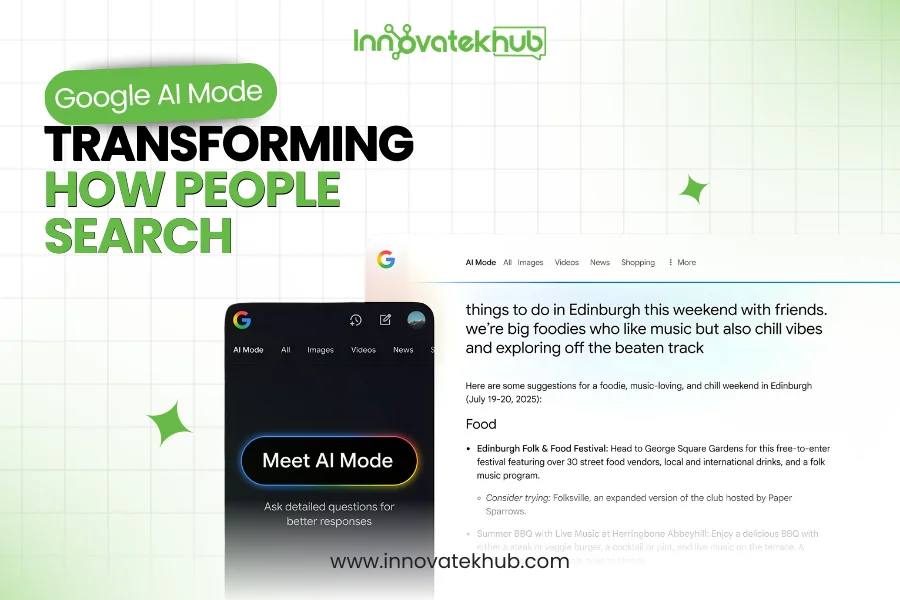
Google AI Mode refers to an AI-powered search experience where artificial intelligence assists users in finding answers, understanding topics, and exploring information more interactively. Instead of only displaying web pages, AI Mode uses advanced models to generate responses that summarize information, explain concepts, and guide users through follow-up questions.
This technology builds on Google’s long-term investment in artificial intelligence, including machine learning, natural language processing, and knowledge graph systems.
In simple terms, Google AI Mode turns the search engine into a conversational assistant capable of understanding context and delivering more meaningful answers.
Why Google Introduced AI Mode
The internet contains an overwhelming amount of information. Traditional search methods often require users to open multiple links and compare sources to find the right answer.
Google AI Mode was introduced to solve several challenges:
- Reduce the time needed to find reliable information
- Provide summarized insights directly in search results
- Improve understanding of complex topics
- Enable conversational search interactions
- Enhance user experience with intelligent responses
By integrating AI directly into search, Google aims to make information discovery faster and more intuitive.
How Google AI Mode Works
Google AI Mode relies on several advanced technologies working together.
Natural Language Processing
Natural language processing (NLP) allows the system to understand queries written in everyday language. Instead of focusing only on keywords, AI Mode interprets the meaning behind a question.
For example, a search like:
“Which electric car is best for long distance travel?”
AI Mode analyzes intent, comparing vehicle range, battery performance, charging infrastructure, and reliability.
Large Language Models
Google uses powerful AI models capable of analyzing vast datasets and generating human-like responses. These models can summarize content, explain concepts, and organize information logically.
Knowledge Graph Integration
Google’s knowledge graph connects millions of data points about people, places, events, and objects. AI Mode uses this structured data to provide accurate contextual information.
Continuous Learning
Machine learning allows AI Mode to improve over time by analyzing user interactions and refining search results.
Key Features of Google AI Mode
| Feature |
Description |
| AI Generated Answers |
Provides summarized responses directly in search results |
| Conversational Queries |
Allows follow-up questions for deeper understanding |
| Context Awareness |
Remembers the context of previous searches |
| Multi-Source Summaries |
Combines information from different sources |
| Visual and Interactive Elements |
Includes images, charts, and recommended resources |
| Topic Exploration |
Suggests related topics for deeper research |
These features transform the traditional search experience into a more interactive knowledge system.
Benefits of Google AI Mode for Users
Users no longer need to visit multiple websites to gather basic information. AI Mode provides a quick overview of key insights.
Simplified Complex Topics
AI-generated explanations make complicated subjects easier to understand, especially for beginners.
Conversational Search Experience
Instead of repeating new queries, users can ask follow-up questions just like in a conversation.
Improved Research Efficiency
Students, professionals, and researchers can gather summarized information quickly before diving into detailed sources.
Personalized Results
AI Mode adapts results based on user behavior, preferences, and search history.
How Google AI Mode Impacts SEO
For website owners, bloggers, and digital marketers, Google AI Mode represents a significant shift in search engine optimization strategies.
Focus on High-Quality Content
Since AI Mode summarizes information from credible sources, websites with well-structured, authoritative content have a higher chance of being referenced.
Emphasis on Topic Authority
Instead of isolated keywords, Google increasingly values comprehensive topic coverage.
Semantic Search Optimization
Content must address user intent and related subtopics to align with AI-driven search understanding.
Increased Importance of E-E-A-T
Experience, expertise, authoritativeness, and trustworthiness remain crucial ranking signals.
Websites that provide unique insights and accurate information will likely perform better in the AI-driven search landscape.
Strategies to Optimize Content for Google AI Mode
To remain competitive, content creators should adapt their strategies.
Write Clear and Structured Content
Organized headings, bullet points, and concise explanations help AI systems interpret information accurately.
Cover Topics in Depth
Comprehensive articles that address multiple related questions increase visibility in AI-generated summaries.
Use Natural Language
Conversational writing aligns with how users interact with AI-powered search.
Provide Original Insights
Unique data, expert opinions, and case studies make content more valuable.
Focus on User Intent
Understanding why users search for certain topics helps create more relevant content.
These practices ensure content remains discoverable even as search technology evolves.
Potential Challenges of Google AI Mode
While AI Mode offers many advantages, it also raises several challenges.
Reduced Website Traffic
If users receive answers directly in search results, they may not visit websites as often.
Accuracy Concerns
AI-generated summaries depend on available data. Incorrect information sources could lead to misleading answers.
Content Attribution
Publishers may worry about whether their content receives proper credit when used in AI summaries.
Ethical Considerations
Balancing AI automation with responsible information delivery remains a key challenge.
Google continues refining AI systems to address these concerns.
AI Mode vs Traditional Search
| Aspect |
Traditional Search |
Google AI Mode |
| Result Format |
List of links |
AI-generated summaries |
| Query Style |
Keyword-based |
Conversational |
| Information Retrieval |
Manual comparison |
Instant insights |
| User Interaction |
One-way search |
Interactive dialogue |
| Learning Experience |
Fragmented |
Integrated knowledge |
This comparison highlights how AI Mode enhances efficiency while maintaining access to traditional search results.
The Role of AI in the Future of Search
Google AI Mode is only one step toward a broader transformation in how people interact with digital information.
Future developments may include:
Personalized Knowledge Assistants
Search engines may evolve into fully personalized assistants that anticipate user needs.
Multimodal Search
Users could combine text, voice, and images to perform complex searches.
Real-Time Data Integration
AI systems may provide constantly updated insights based on live data sources.
Deeper Context Understanding
Future models may understand emotional tone, intent nuances, and long-term user preferences.
These advancements could redefine how humans interact with the internet.
What This Means for Content Creators
Writers, bloggers, and website owners must adapt to the changing search environment.
The key to success lies in:
- Creating valuable, well-researched content
- Building authority in specific niches
- Providing unique insights rather than generic information
- Focusing on reader experience rather than keyword manipulation
In the AI era, authenticity and expertise matter more than ever.
Final Thoughts from Innovatek Hub
Google AI Mode represents a major evolution in the way people search for information online. By integrating advanced artificial intelligence into the search experience, Google is moving beyond simple keyword matching toward a more intelligent, conversational approach to knowledge discovery.
At Innovatek Hub, we see this development as part of a larger transformation where AI becomes deeply integrated into everyday digital experiences. While it introduces new challenges for publishers and marketers, it also encourages higher-quality content and more meaningful online interactions.
As AI continues to advance, the relationship between search engines, content creators, and users will keep evolving. Those who focus on providing genuine value, reliable information, and engaging experiences will remain successful in the new era of AI-powered search.
The future of search is not just about finding information, it’s about understanding it faster, exploring it deeper, and interacting with it more intelligently than ever before.













No Comments