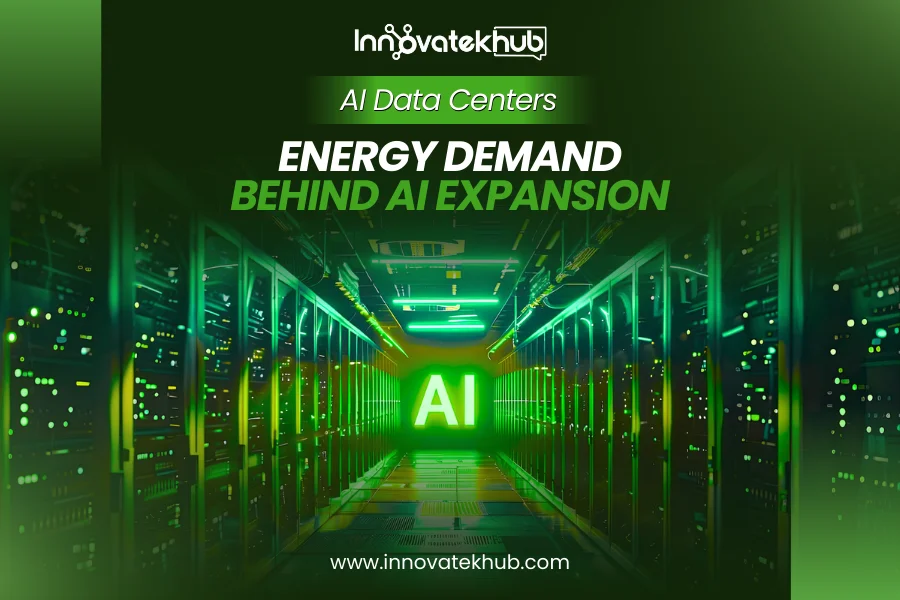
Artificial intelligence is transforming industries at an extraordinary pace. From generative AI tools to predictive analytics platforms, the digital world is accelerating faster than ever. But behind every AI breakthrough lies a powerful infrastructure engine — data centers.
In recent months, AI data center energy news has become a major global topic. Governments, technology companies, environmental experts, and energy providers are increasingly concerned about how much electricity artificial intelligence consumes. The rapid growth of AI workloads is reshaping energy markets, sustainability strategies, and even national power policies.
At Innovatek Hub, we examine technology beyond innovation headlines. This detailed guide explores why AI data centers are consuming more energy, what the latest developments reveal, how companies are responding, and what the future holds for sustainable AI infrastructure.
Why AI Data Centers Consume So Much Energy
Artificial intelligence systems, especially large language models and deep learning networks, require enormous computational power.
Training a large AI model involves:
- Processing billions of data points
- Running complex neural network calculations
- Using thousands of GPUs simultaneously
- Continuous data storage and transfer
Unlike traditional cloud applications, AI workloads are highly intensive and run on specialized hardware such as advanced graphics processing units.
Companies like NVIDIA design AI-focused GPUs that deliver exceptional performance — but also demand significant electricity.
The combination of high-performance hardware and 24/7 operations makes AI data centers energy-intensive facilities.
Recent AI Data Center Energy Developments
Energy consumption tied to artificial intelligence is now a major industry headline.
Surge in Global Electricity Demand
According to industry analysts, AI-driven data centers are contributing to a noticeable rise in electricity demand worldwide. Countries investing heavily in AI infrastructure are seeing increased pressure on their national grids.
Hyperscale Data Center Expansion
Major technology companies such as:
are expanding hyperscale data centers to support AI cloud services. These facilities require massive cooling systems, high-density servers, and advanced networking hardware.
The energy demand of these new AI-focused facilities often rivals that of small cities.
The Impact of Generative AI on Energy Usage
The rapid rise of generative AI platforms has intensified energy concerns.
Organizations such as OpenAI have developed advanced language models that require substantial computational training.
Generative AI affects energy consumption in two key phases:
Model Training
Training large AI models can consume enormous amounts of electricity over weeks or months.
Inference Phase
Once deployed, every user interaction requires processing power. With millions of daily users, inference energy adds up quickly.
As generative AI adoption grows globally, energy demand scales proportionally.
Cooling Systems and Infrastructure Challenges
Energy consumption in AI data centers is not limited to computing power. Cooling infrastructure is another major contributor.
High-performance AI chips generate intense heat. Without proper cooling:
- Hardware performance declines
- System failures increase
- Operational risk rises
Modern AI data centers use advanced cooling techniques such as:
- Liquid cooling systems
- Immersion cooling
- AI-driven temperature optimization
- Renewable energy-powered cooling
These innovations aim to reduce overall power usage effectiveness (PUE).
AI data center energy news frequently highlights environmental sustainability concerns.
Electricity production often relies on fossil fuels. If AI infrastructure grows without renewable integration, carbon emissions may increase significantly.
Environmental experts warn about:
- Increased greenhouse gas emissions
- Water consumption for cooling
- Land usage for data center expansion
- Electronic waste from hardware upgrades
Balancing AI innovation with environmental responsibility has become a central challenge.
Renewable Energy Solutions
To address energy challenges, major technology companies are investing heavily in renewable energy.
Solar and Wind Power
Companies are signing long-term agreements to power AI data centers using solar farms and wind projects.
Nuclear Energy Partnerships
Some tech firms are exploring nuclear energy partnerships to secure stable, low-carbon power supply.
Energy Storage Innovations
Battery storage systems help stabilize renewable energy usage during peak AI demand periods.
These initiatives aim to make AI infrastructure more sustainable.
Government Policies and Energy Regulations
Governments worldwide are monitoring the rapid growth of AI infrastructure.
The European Union has introduced stricter sustainability standards for data centers. Energy efficiency reporting requirements are becoming more common.
In the United States, regulatory agencies are assessing how large-scale AI expansion impacts national energy grids.
Energy planning now includes projections for AI-driven electricity consumption growth.
Economic Implications of AI Energy Demand
The rising energy demand tied to AI data centers influences:
- Electricity prices
- Infrastructure investment
- Real estate development
- National energy security strategies
Regions with abundant renewable energy resources are becoming attractive locations for AI data center construction.
Energy availability is becoming a competitive factor in global AI leadership.
Technological Innovations to Reduce Energy Use
The AI industry is actively developing solutions to improve efficiency.
Energy Efficient Chips
New generations of AI chips aim to deliver higher performance per watt.
AI Optimizing AI
Machine learning systems are being used to optimize server loads, cooling performance, and workload distribution.
Modular Data Center Designs
Modular architecture allows flexible expansion while maintaining energy efficiency.
Edge Computing
Processing data closer to users can reduce centralized energy demand.
These innovations are crucial for sustainable growth.
The Role of Cloud Providers
Cloud service providers play a central role in AI infrastructure energy consumption.
Companies like:
- Amazon Web Services
- Microsoft Azure
- Google Cloud
offer AI services hosted in massive data centers. Their energy strategies significantly influence global consumption patterns.
Many cloud providers now publish sustainability reports outlining:
- Carbon neutrality goals
- Renewable energy investments
- Energy efficiency improvements
Transparency is becoming a key competitive advantage.
Water Usage in AI Data Centers
Energy news around AI data centers also includes water consumption concerns.
Cooling systems often require large volumes of water. In regions facing water scarcity, this creates environmental tension.
Companies are exploring:
- Closed-loop cooling systems
- Air cooling alternatives
- Water recycling technologies
Responsible water management is emerging as an equally important sustainability issue.
Balancing Innovation and Sustainability
Artificial intelligence offers enormous benefits:
- Medical breakthroughs
- Climate modeling
- Smart transportation
- Economic growth
However, these benefits must not come at the cost of environmental damage.
The challenge lies in balancing:
- Rapid AI expansion
- Energy efficiency
- Carbon reduction targets
- Infrastructure resilience
Responsible innovation requires long-term planning.
Future Outlook of AI Data Center Energy
Looking ahead, AI energy demand is expected to continue rising.
Key future trends include:
- AI-specific power plants
- Renewable-powered hyperscale facilities
- AI energy efficiency standards
- Cross-border energy collaboration
- Advanced semiconductor breakthroughs
Energy strategy will become inseparable from AI development strategy.
Countries investing in clean energy infrastructure will likely gain competitive advantage in AI deployment.
Why This Topic Matters Now
AI data center energy news is not just a technical discussion. It affects:
- Climate goals
- Electricity affordability
- National infrastructure planning
- Corporate sustainability commitments
The rapid expansion of artificial intelligence has created an urgent conversation about resource management.
Energy efficiency is no longer optional. It is essential for the long-term success of AI ecosystems.
Final Thoughts from Innovatek Hub
The surge in artificial intelligence innovation has brought unprecedented opportunities. Yet, behind every AI-powered tool lies a network of data centers consuming vast amounts of energy.
At Innovatek Hub, we believe technological progress must be measured not only by performance but also by responsibility. AI data center energy news highlights a critical truth: sustainable infrastructure will define the future of artificial intelligence.
As AI continues to reshape industries, energy efficiency, renewable integration, and smart infrastructure design will determine whether this revolution remains sustainable.
The next phase of AI growth will depend not only on algorithms and models but also on how intelligently we power them.












No Comments