Artificial intelligence is no longer a future concept. It is here — shaping industries, influencing decisions, and redefining how humans interact with technology. From healthcare diagnostics to automated hiring systems and predictive analytics, AI has become deeply embedded in modern infrastructure. But alongside innovation comes responsibility.
The rapid acceleration of artificial intelligence has triggered what many experts describe as an AI governance wake-up call. Governments, technology companies, researchers, and society at large are now realizing that innovation without regulation can lead to unintended consequences.
At Innovatek Hub, we believe that technological growth must move hand in hand with ethical responsibility. This article explores why AI governance has become urgent, what challenges exist, global regulatory movements, and what the future of responsible AI development looks like.
What Is AI Governance
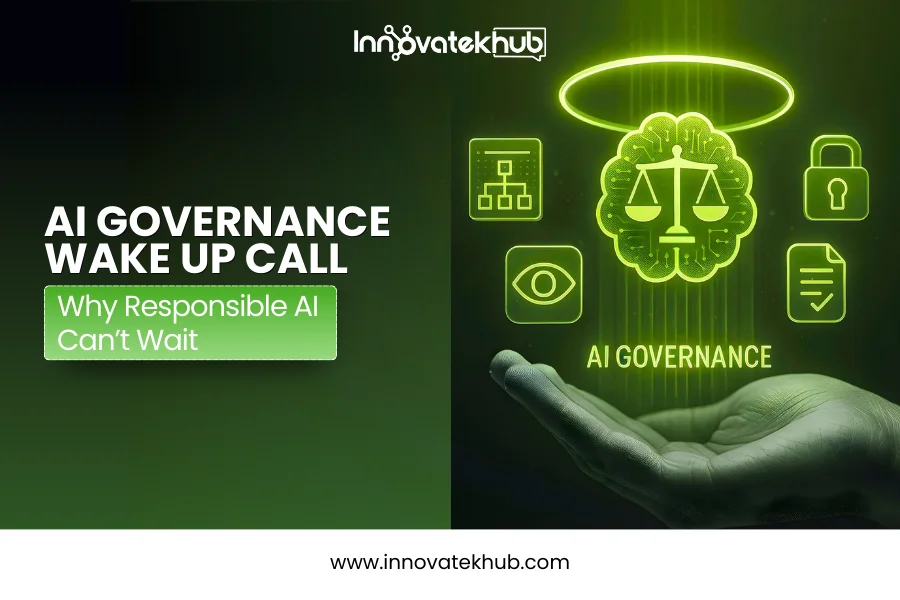
AI governance refers to the framework of policies, regulations, ethical guidelines, and oversight mechanisms that ensure artificial intelligence systems are developed and deployed responsibly.
It includes:
- Ethical AI development standards
- Transparency requirements
- Data privacy protection
- Algorithmic accountability
- Risk management strategies
- Regulatory compliance
AI governance is not about stopping innovation. It is about guiding it safely.
Why This Is a Wake Up Call
Artificial intelligence systems now influence:
- Loan approvals
- Medical diagnoses
- Hiring decisions
- Criminal risk assessments
- Social media content moderation
- Autonomous vehicles
When algorithms shape real-world outcomes, mistakes are no longer minor technical errors. They can affect livelihoods, reputations, and even lives.
The wake up call comes from several realities:
- AI systems can inherit bias from training data
- Deepfake technology can spread misinformation
- Generative AI can produce misleading or harmful content
- Autonomous systems can malfunction
- Data misuse can violate privacy at scale
The scale of AI impact demands structured governance.
The Global Push for AI Regulation
Countries and international organizations have started introducing regulatory frameworks to address AI risks.
European Union AI Act
The European Union introduced the AI Act, one of the first comprehensive legal frameworks regulating artificial intelligence systems. It categorizes AI tools based on risk levels, from minimal risk to high-risk applications such as biometric surveillance.
The Act emphasizes:
- Transparency
- Human oversight
- Accountability
- Risk mitigation
United States Policy Initiatives
In the United States, executive actions and AI safety discussions have been initiated under the guidance of federal agencies. Organizations like:
- National Institute of Standards and Technology
have proposed AI risk management frameworks to guide ethical development.
United Nations Perspective
The United Nations has also discussed the global implications of artificial intelligence, particularly around misinformation, labor displacement, and digital inequality.
The message is clear: AI governance is becoming a global priority.
Major Risks Driving the Governance Debate
1. Algorithmic Bias
AI systems learn from data. If historical data contains discrimination, the system may replicate it. For example:
- Biased hiring algorithms
- Unequal credit scoring systems
- Facial recognition inaccuracies
Unchecked bias can amplify social inequalities.
2. Lack of Transparency
Many advanced AI systems operate as “black boxes.” Even developers sometimes struggle to explain why an algorithm produced a certain decision.
Transparency is essential for trust.
3. Data Privacy Concerns
AI systems rely heavily on user data. Without strong data protection measures, personal information can be misused.
Privacy regulations such as GDPR have set standards, but AI’s complexity requires additional safeguards.
Generative AI tools can create realistic fake videos, voices, and text. This increases the risk of:
- Political manipulation
- Fraud
- Reputation damage
- Social instability
Governance frameworks must address synthetic media risks.
5. Autonomous Decision Making
Autonomous vehicles and robotic systems powered by AI raise critical safety concerns. Companies like:
have advanced self-driving technologies, but accidents and system failures highlight the need for oversight.
Corporate Responsibility in AI Governance
Governments cannot handle this challenge alone. Technology companies must adopt internal governance policies.
Major tech firms such as:
have introduced responsible AI principles focusing on fairness, accountability, and transparency.
Corporate AI governance strategies often include:
- Ethical review boards
- Bias detection testing
- Model auditing
- Human-in-the-loop systems
- Safety red teaming
These efforts signal growing awareness, but enforcement consistency remains a challenge.
The Economic Impact of AI Governance
Strong governance does not slow economic growth. In fact, it builds trust, which encourages adoption.
Without governance:
- Consumers lose confidence
- Businesses face legal risk
- Investors hesitate
- Governments impose emergency bans
With governance:
- Innovation becomes sustainable
- Risk is managed proactively
- Public trust increases
- Cross-border collaboration improves
The AI governance wake up call is also an economic opportunity.
Ethical AI Development Principles
Responsible artificial intelligence rests on several core principles:
Transparency
AI systems should provide explainable outputs where possible.
Fairness
Models must be tested for bias across demographics.
Accountability
Developers and organizations must take responsibility for system outcomes.
Privacy Protection
Data collection and processing must follow strict standards.
Human Oversight
AI should assist human decision-making, not replace it entirely in critical areas.
These principles form the backbone of AI policy frameworks worldwide.
AI Governance Challenges
Despite progress, governance faces real obstacles.
Rapid Innovation Speed
AI technology evolves faster than legislative processes.
Cross Border Complexity
AI systems operate globally, but regulations differ by country.
Technical Complexity
Policymakers often lack deep technical expertise.
Enforcement Limitations
Even with laws in place, monitoring compliance is difficult.
The wake up call is not just about creating policies. It is about creating effective, adaptable systems.
The Role of AI Ethics Committees
Many organizations now establish internal AI ethics boards. These committees evaluate:
- High-risk deployments
- Ethical dilemmas
- Data sourcing practices
- Model fairness audits
However, critics argue that voluntary ethics boards without legal accountability may lack enforcement power.
This highlights the need for independent oversight mechanisms.
Public Awareness and Digital Literacy
AI governance is not only a government or corporate responsibility. Public awareness plays a critical role.
Users must understand:
- How their data is used
- When they are interacting with AI
- The risks of misinformation
- The importance of digital literacy
Educational institutions and media platforms should promote AI awareness programs.
AI in Sensitive Sectors
Certain sectors require stronger governance due to higher risk.
Healthcare
AI diagnostic tools must undergo rigorous testing before clinical use.
Finance
Automated credit scoring and fraud detection systems must ensure fairness.
Criminal Justice
Risk assessment algorithms must be transparent and auditable.
Education
AI-based evaluation tools must avoid bias.
These areas highlight why AI governance is not optional.
The Future of AI Regulation
Looking ahead, AI governance will likely include:
- Mandatory AI auditing
- International regulatory cooperation
- Certification systems for AI tools
- Real-time monitoring mechanisms
- Clear liability laws
The goal is not to block innovation but to create guardrails.
Why Businesses Must Act Now
Companies that ignore AI governance risk:
- Legal penalties
- Brand damage
- Investor withdrawal
- Customer distrust
Proactive AI risk management includes:
- Conducting algorithm audits
- Training employees in AI ethics
- Implementing compliance frameworks
- Documenting data sources
- Monitoring system performance continuously
Responsible AI is becoming a competitive advantage.
The Human Element in AI Governance
At its core, AI governance is about protecting human values.
Technology should enhance:
- Human dignity
- Social equity
- Economic opportunity
- Safety and security
Without governance, artificial intelligence could widen inequalities or create systemic harm.
With thoughtful oversight, it can empower societies.
Final Reflections from Innovatek Hub
The AI governance wake up call is not a moment of panic. It is a moment of clarity.
Artificial intelligence holds transformative potential, but it must operate within ethical and legal boundaries. The responsibility lies with governments, corporations, developers, and users alike.
At Innovatek Hub, we believe that innovation without accountability is incomplete. The next phase of AI development will not be defined solely by technological breakthroughs. It will be defined by how responsibly those breakthroughs are implemented.
AI is powerful. Governance ensures that power is used wisely.
The wake up call has arrived. The real question now is how quickly we respond — and how thoughtfully we build the future of artificial intelligence.















No Comments