Introduction to Agentic AI
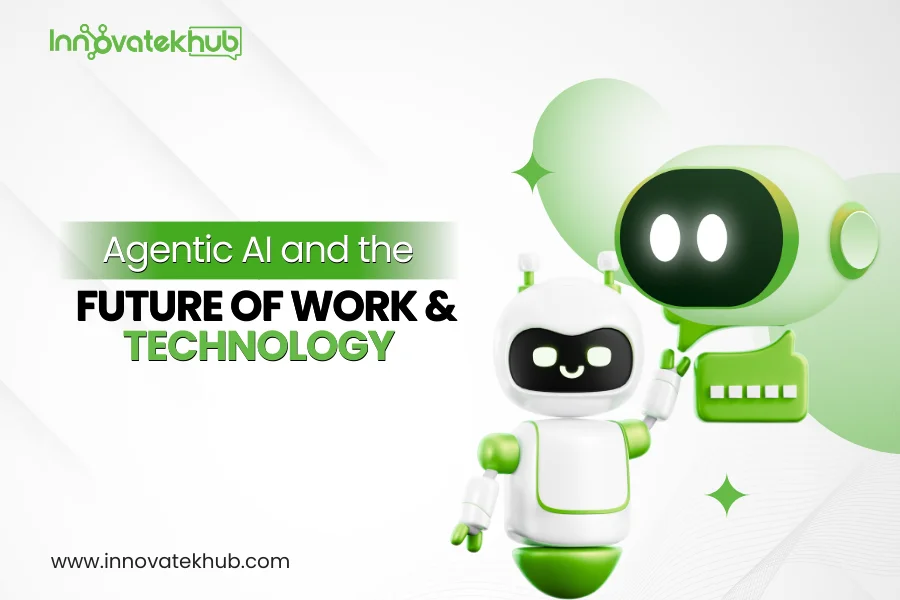
Agentic AI is rising as one of the most influential developments in present-day synthetic intelligence. In easy phrases, agentic AI refers to AI systems that can perform as independent marketers, meaning they can make decisions, take actions, examine consequences, and adapt without constant human supervision. The word agentic AI information is appearing anywhere in tech reviews, studies, courses, enterprise briefings, and innovation blogs due to the factthat this era pushes AI far past being just a chatbot or question-answering device. Instead of truly responding to commands, agentic AI can independently plan obligations, access equipment, seek information, organize steps, and fulfill dreams. This shift adjusts how we consider productivity, automation, and human-machine collaboration in each private and expert environment.
What Makes Agentic AI Different From Traditional AI
Traditional AI systems are reactive. They answer questions, generate content, or classify information; however, they no longer act independently. You have to teach them little by little. Agentic AI, however, introduces the idea of autonomy and initiative. It is proactive in preference to reactive. It can get hold of a purpose which includes “organize market studies and create a record” and then independently break down the challenge into smaller steps, search for facts, analyze results, create files, and refine output. This includes multiple middle capabilities together with long-term memory, multi-step reasoning, tool use, environment interplay, and self-assessment. That is why people increasingly describe agentic AI as a virtual co-worker or virtual teammate rather than an easy application. In current agentic AI news, this distinction is emphasised again and again as it represents an authentic soar in capability.
How Agentic AI Works on a Technical Level
To understand agentic AI more deeply, it helps to see how it functions internally. Agentic AI relies on a combination of large language models, reinforcement learning, planning algorithms, and tool-calling systems. Large language models provide reasoning, understanding, and communication ability. Planning frameworks allow the AI to map out steps toward a goal. Tool-calling systems let AI interact with browsers, APIs, documents, databases, and applications. Feedback loops allow the AI to evaluate whether its actions succeeded or failed and try again if necessary. This means agentic AI does not simply output text but can perform workflows. That capability is what separates agentic AI from earlier generations of automation and leads to its frequent appearance in artificial intelligence news updates.
Key Features of Agentic AI Systems
Agentic AI structures proportion several defining traits. First, they have an aim orientation — they aim toward objectives rather than single responses. Second, they display self-reliant movement, which means they can execute duties inner connected environments like CRM tools, cloud platforms, or study databases. Third, they own adaptive getting to know conduct wherein they adjust techniques primarily based on consequences or comments. Fourth, they have got contextual memory, allowing them not forget in advance steps in long workflows. Finally, they combine more than one package to run complicated procedures. These functions collectively give an explanation for why agentic AI automation is hastily changing industries, including finance, training, advertising, fitness care, and logistics.
Real-World Applications of Agentic AI
Agentic AI is not theoretical; it is already being deployed in real systems.
In advertising, AI agents carry out search engine optimization studies, examine competition, cluster key phrases, draft content, schedule posts, and examine analytics. This replaces many repetitive guide responsibilities and enables a quicker approach to execution.
In software program improvement, agentic AI debugging gear reads codebases, identifies security issues, applies patches, generates documentation, or even writes code autonomously. This extensively shortens development lifecycles. In customer support, independent AI guide agents apprehend user motive, reply conversationally, escalate cases when necessary, and examine from repeated interactions to enhance customer experience.
In finance, agentic AI agents audit transactions, discover fraud patterns, generate compliance reports, forecast traits, and monitor risk signals continuously. In healthcare research, AI retailers test clinical papers, synthesize medical statistics, become aware of discovery pathways, guide analysis pointers, and automate documentation.
Each of these examples indicates why agentic AI information is now mentioned not only in tech circles but also in enterprise control, healthcare coverage, economic boards, and education planning.
Advantages of Agentic AI for Businesses and Individuals
The upward thrust of agentic AI brings several benefits. Productivity will increase due to the fact that AI takes over hard work-extensive and repetitive duties. Accuracy improves as self-sufficient retailers comply with commands always without fatigue. Businesses’ shop charges through sensible automation while still maintaining fantastic output. Smaller corporations take advantage of agency-level functionality without hiring massive staff. Decision-making will become data-driven because agentic AI analyzes huge datasets hastily. Innovation quickens due to the fact that AI retailers assist with brainstorming, research, checking out, and execution. Individuals also gain through non-public AI sellers that manipulate emails, schedules, gain knowledge of plans, financial monitoring, and everyday virtual corporation. All these advantages are recurring topics in modern-day AI generation information coverage.
Challenges and Ethical Issues Surrounding Agentic AI
Despite its promise, agentic AI additionally raises severe questions. One of the most important issues is over-reliance on autonomy. If AI structures operate without enough human oversight, mistakes ought to compound. Another essential difficulty is bias and fairness. AI learns from facts, and if those facts reflect inequality, AI outputs can enhance those styles. Privacy concerns arise due to the fact that agentic AI may also need access to private or touchy data to operate effectively. There are also worries about accountability — when AI acts as an self sufficient agent, society should decide who is responsible for its decisions. Job transformation is another frequently mentioned topic in agentic AI news. Automation may additionally trade employment landscapes, requiring reskilling and non-stop getting to know for workers. That is why accountable design, governance frameworks, and ethical guidelines are crucial additives of the destiny of agentic AI.
The Role of Agentic AI in the Future of Work
The administrative center will no longer disappear due to AI; instead, it will evolve. Agentic AI will likely automate repetitive administrative, analytical, and operational tasks. Human roles will shift toward creativity, method, management, emotional intelligence, complex hassle fixing, and courting-primarily based paintings. Collaboration between humans and AI sellers has become the norm in preference to an exception. Companies will hire networks of specialised AI dealers working collectively with human groups, just like departments cooperating in an organisation. The destiny of labor consequently entails augmentation instead of replacement, a course echoed throughout AI team of workers’ information discussions globally.
Digital transformation projects are increasingly encompassing agentic AI as a crucial issue. Organizations are remodeling workflows around automation, AI-powered selection structures, and self-sufficient virtual operations. Agentic AI performs a strategic position by coordinating systems, monitoring performance, and executing methods in real time. Instead of honestly adding AI onto existing structures, groups now restructure operations to permit AI-driven ecosystems. This leads to smarter delivery chains, predictive upkeep, agile commercial enterprise models, and consumer personalization at scale. That is why agentic AI is now associated with agency AI adoption, clever automation platforms, and subsequent-generation computing in lots of era method reports.
Future Trends Predicted in Agentic AI News
Several trends are rising as agentic AI continues to mature. One trend is the rise of multi-agent systems, wherein more than one specialised AI retailers collaborate on complex obligations. Another trend is pretty personalised AI partners that learn personal preferences and help in daily life. There may also be increased laws as governments set up standards for transparency, accountability, and safety. AI will continue to expand into creative fields, which include filmmaking, song production, recreation design, and virtual artwork. Education systems will, in all likelihood, combine agentic AI tutors able to provide personalised, adaptive guidance. Overall, the direction is closer to deeper human-AI integration across society.
Conclusion
Agentic AI represents one of the most crucial technological shifts of our time. It moves artificial intelligence from passive responding to energetic participation. Through self-reliant AI dealers, workflows become faster, companies greater green, and individuals become more empowered. At the same time, accountable use, ethics, transparency, and human oversight stay crucial. Following agentic AI news allows human beings live informed about how these systems evolve, what possibilities they carry, and what challenges society should address. The future will not certainly be AI changing human beings; however, humans and AI working together in absolutely new approaches, reshaping work, creativity, and everyday life.




No Comments